
The idea of this trip was born when I read Laura Stone’s book “Himalaya by Bike”. In the appendices there was a brief description of the route from Kashgar to Lhasa and it did not take much imagination to conjure up a bike trip on the Karakoram Highway from Pakistan over the Khunjerab Pass to Kashgar. From Kashgar there is an obvious route across the Takla Makan Desert to Ye Cheng, then south to Mazar, across the Aksay Chin Plateau to Tibet to Mt Kailash and on eastwards to connect with the Friendship Highway to Nepal. A side trip was added to the Gugu Kingdom southeast of Namru to view the startling ruins of Tsaparang.
My next task was to find a tour company that would provide logistics for the proposed trip across Xinjiang and Tibet. This was quite difficult to organize as I was not sure how many people I could entice onto this trip nor which company to approach. Needless to say the price was very dependent on the number of people. I would have preferred a Nepalese company but this was going to vastly exceed my budget so in the end I settled for a Chinese tour company called ‘Visit Tibet Tour and Travel’.
I cast around my cycling friends who had accompanied me on my Lhasa to Kathmandu trip in 2006 but no one was interested including Belinda. Then on the off chance I asked Sier, the other half of Waihopai Health Services. Wise man that he is he was enthusiastic of my plans. He readily agreed to come and so the trip was born. Once I had the company sorted out and the team ( the two of us) I bought a new bike for myself. The Baths of Gladstone Cycles were invaluable in this regard and soon I had a steel Jamis 29er Mountain Bike in my possession.
As the route crossed four of the main mountain ranges of Central Asia I planned an acclimatisation program in Pakistan and the obvious place was Fairy Meadow under the shadow of Nanga Parbat. Previously I had been in contact with Rehmat Nabi who runs Fairy Meadow Tours and Rakhiot Serai and he organised our stay up there. Debbie Wright of Air New Zealand helped organise the most direct route to Islamabad and I found the New Cape Grace Guesthouse run by Karim Meghji to be an excellent base.

Pakistan:
There were no hassles at Islamabad and once through we were met by our driver and taken to the New Cape Grace Guest House where Karim, the owner, greeted us. He told us Ghulam Nabi was to phone us shortly. He showed us upstairs to a very well appointed room with an enormous double bed and a smaller single one. I scored the big bed! Then Ghulam rang and warned us the Gilgit flight that day had been cancelled and we were shortlisted for Tuesday. I slept poorly that night probably due to the heat and excitement of the trip.
Up early next day to get out to the airport with our two bike bags in 2 taxis. At the airport we were told that we were wait listed and would have to wait for some time to see how many passengers were flying. So we hung around for ages only to be told the flight had been cancelled again. We quickly made a decision to get a refund on our tickets and go by road. I rang Ghulam who said he would organize it and it was likely to cost 25,000 PKR. This was about $175 USD each so not expensive. Next I parked Sier outside the Terminal with the bike bags and set off to get the refund on the tickets, find a van to take us back to New Cape Grace, change some USD into Renminbi. It was very hot and the place was bustling and noisy so not an easy task. Just as we were leaving the PIA man from the refund office approached me to say they has short changed us on the refund and paid us the balance owed. We were most impressed with his honesty.
The taxi man, an old wizened gentleman called Azim claimed to have a van but in fact it was a tiny one that barely fitted in our bike bags. He wanted 2000 PKR so we settled for 1500 PKR. He was very helpful when I got my refund and changed some money at the airport. Azim had some difficulty in finding NCG Guest House. Once there we had some breakfast and further discussions with Ghulam. We agreed to hire a landcruiser and travel to Rakhiot Bridge via the Barbusar Pass breaking the journey at Naran for the night. I had no idea where this was but it sounded OK to me. Sier had his new Apple laptop and skyped Jenny at breakfast so that was fun. A man arrived from the car hire company that we paid and at lunchtime our driver Akhtar arrived with the landcruiser.


 Northwards we passed through Harpur, Havelian, Abbottsabad and Mansera where we took a right to the Kaghan Valley. This very long valley gradually climbs over 150 kilometres to the Babusar Pass leading to the Indus Valley. It’s a very picturesque drive up an increasingly steep valley to Naran where we stopped for the night. We arrived in the dark and drove down a dirt road and we could see some lights on among pine woods. I thought this was a bit odd but it turned out to be the PTDC Naran Hotel. There were a few people in a dimly lit room and the reception suggested 2700 PKR for a twin bed room and we settled for 2217PKR after a room inspection. The room was actually quite nice much to my surprise. We then had a dinner of rice and chicken and crashed as we were both dead tired.
 I slept well according to Sier who said I snored. It was much cooler than Islamabad. We went for a walk before breakfast in the pine woods surrounding the hotel. The place was deserted as it was Ramadan and few people were travelling. We entered a huge dining hall that was empty apart form a Pakistani family and had breakfast of eggs and chapattis. Then we set off with Akhtar climbing higher up the Kaghan Valley to a lake and beyond that the Babusar Pass at 4100 meters. Here I jumped out of the car to take some photos and nearly blacked out when the altitude suddenly hit me. I felt extremely dizzy and faint.
There was a steep descent down a narrow valley to the Indus nearly 3000-meters below. The mountainsides were dry and rocky but water races had irrigated terraces and villages in the valley floor. Lower down the road cut across a huge cliff made of dry clay and stones over a massive drop. Beyond this over a spur we dropped down to Chilas, a green oasis on a terrace beside the Indus River. Akhtar drove down a steep laneway to the KKH and on the outskirts of town he inexplicably stopped, then spoke to someone on his cellphone and announced we were going to Chilas to a hotel and we would be travelling on a bus to Raikot Bridge! This was not the plan at all as we had paid to go to Raikot Bridge so I tried to ring Ghulam but got no reply. Akhtar introduced us to a friendly chap at the hotel who it transpired owned rental cars and indicated we would be travelling to Raikot in one of these! It sounded like a scam to me so I insisted he ring Rehmat and this seemed to clear the air_ we would be going to Raikot Bridge with Akhtar after all.
We had a meal upstairs in the hotel then off up the potholed KKH to Raikot Bridge. It was Ramadan and Akhtar had not eaten or drunk all day and his driving was erratic and seemingly dangerous. On the way he stopped to chat to some friends coming the other way in a vehicle near a plaque to a Japanese film crew who had died at that spot after running off the road into the Indus! Miraculously we arrived at Raikot Bridge and finally met up with Rehmat who was waiting there in a jeep.
By now the sky had darkened and it was spitting rain. I shook hands with Rehmat and asked if we could discuss the plan for Fairy Meadow as I was uncertain what was happening. Down the road a kilometer was Rehmat’s half finished restaurant so we went there and pulled up some chairs and had a brief talk. It seemed like all had been planned and we agreed to talk that night up at Tato. He suggested we leave our bikes at the restaurant and just take what we wanted up to Fairy Meadow.

Awoke to a beautiful day. We slept on the floor of the hut and it was comfortable and clean. No one was about so we checked out the area till someone arrived to prepare our breakfast. When we announced we would head up to Fairy Meadow, Rehmat appeared to see us off. He would follow later with the baggage on mules. He told us to go to his hotel Raikot Serai at Fairy Meadow. This was at an altitude of 3300 meters. The track wound through pine forest then sidled up a sandy cliff to a level grassy plain with wooden houses. Raikot Serai had a series of chalets with spectacular views towards the Northwest Face of Nanga Parbat. Arriving there we were greeted warmly by the staff who went off to make us some tea and then shown to our chalet. After a big lunch we decided to walk up valley to the ‘Viewpoint” at 14:00.


 It was a walk of about an hour to Beyal, a small settlement of huts in an open clearing on a plain above the Rakhiot Glacier. Past here we continued to a high point at 3865 meters with a view of the Rakhiot Glacier. We turned around at 17:00 hours and got back at 19:00 hours pretty tired. We had dinner with Rehmat who told us a lot about the area. His great grandfather first settled Fairy Meadow. We also met a Pakistani writer called Jaylees Hazir who writes a column in one of the national newspapers. He was most interesting to talk to and he was writing a book. After dinner we collapsed into bed. Sier reckons I was screaming that night in my sleep! Poor Sier.
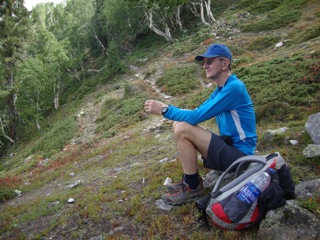 On Friday at breakfast with Rehmat we decided to climb Susuru Bush. But first we visited the school at Fairy Meadow with Rehmat. There were two classrooms one for boys and one for girls and one teacher. One of the boys came with us as our guide and put us on the route up the mountain. Ahead was a broad couloir filled with rocks and here I changed into my shorts for the stiff climb ahead. There was a sheep/goat track up the gully that climbed to a summit at 3900 meters just above bushline. Here we rested and lay in the grass with superb views all around. It was quite cloudy towards Nanga Parbat.
 We ambled back down in the early afternoon as we had planned a major effort for next day to reach
camp one on the Great Moraine. After dinner we had a talk with Rehmat at a fire outside and mentioned we were keen to sponsor a scholarship. He made the suggestion we could pay the salary of a teacher at the school at Beyal that was currently being built. This is to be a summer school operating for only three months of the year. The teacher’s salary would be 25,000 PKR a month. Sier and myself made a few enquiries about the school and said we would give it careful consideration.
camp one on the Great Moraine. After dinner we had a talk with Rehmat at a fire outside and mentioned we were keen to sponsor a scholarship. He made the suggestion we could pay the salary of a teacher at the school at Beyal that was currently being built. This is to be a summer school operating for only three months of the year. The teacher’s salary would be 25,000 PKR a month. Sier and myself made a few enquiries about the school and said we would give it careful consideration.
Saturday was our big day. We had arranged to have breakfast at 5.00AM so we could make an early start. The staff got a big packed lunch for us plus we bought 4 packets of biscuits. We started at 6:10 AM and walked to Beyal. I felt breathless and lethargic at the start but perked up later. At the lookout I changed into my shorts as I find it much easier to climb in these. From Beyal we were accompanied by a herd of goats heading for the high pastures around base camp. Past the lookout the path dropped onto the moraine covered Ganalo Glacier. On the far side we crested a moraine wall and followed the crest of this to a large cairn where we stopped for lunch. Further on the moraine crest dropped a bit then rose in a crescent sweeping around to the base of the Great Moraine. Our height was about 4100 meters. Sier was feeling very weak.

As soon as I got back I did my daily pushups much to the amusement of Rehmat. There was a large group of Germans staying at Rakhiot Serai and we talked to their leader about routes up valley. Later at a campfire I talked to a German lady who was married to a dentist and she said she had trouble finding people to do trips with. We decided on a rest day for tomorrow. The hotel was busy with two German parties and their tents pitched on the lawn.

 Monday we planned on reaching the Khusto Pass at nearly 5000 meters. The staff at the Raikot Serai said we should spend the night at Beyal and do it from there next day but I said that was not necessary as it was only a short distance from FM. We got up at 3:45AM for breakfast at 4:00AM and set off at 5 just as it was getting light. From Beyal we ascended the South Jalipur Stream to the Khusto Pass supposedly at 4837 meters but my altimeter registered 4710 meters. It was a steady climb and the last 700-800 meters was up a boulder slope and very tiring. We finally got there at 11:30, a time of 6H 20M. We found the altitude quite taxing. Spent quite a while on top. The views were excellent. North Jalipur Peak looked shattered and dangerous. The South Jalipur was some way off and did not look like its stated height of 5206 M. We took a video of the amazing views and headed down. At 4000 M was a nice grassy area with some streams running across it and we rested here for 30 minutes. We got back to Raikot Serai at 16:30 hours elated and not really tired.
 Tuesday we decided on a rest day at FM. It was too hot in any case to do much. We redid our itinerary and discussed it with Rehmat. In the evening went for a walk with Mahfuz to an area just below FM. Tomorrow we would descend to Gilgit and start up the KKH.
The first successful ascent of Nanga Parbat was in 1953 by the Dr K Herlingkoffer’s “Willie Merkl Memorial Expedition”. Herman Buhl made the solo ascent including a bivi out at over 8000 meters, an outstanding achievement. A Japanese expedition climbed the Rakhiot face in 1996. In 2008 the Italian expedition ended in disaster with the death of its leader Karl Unterkircher in a crevasse fall.
On Wednesday 24th we said our goodbyes to Rehmat and his staff and set off down to Tato with Mehmood, Rehmat’s son. He is a nice young man who is studying Islam studies and business. We met our jeep and driver at Tato. A Danish student asked for a lift so we had a fairly loaded jeep on the way down the Rakhiot Nullah. From Rakhiot Bridge we drove to Gilgit passing a young European lady pushing her bike down hill on the ruined KKH in stifling heat. We felt very guilty we did not stop and offer her some sustenance as the driver tore past her.
In Gilgit we booked into the PTDC Hotel that was quite nice and then went for a walk in very hot temperatures along Airport Road to try to find an internet site. The only one I could find was grubby and did not seem very secure so I fled. Sier was in a state of collapse so we headed back to the hotel. Mehmood came in the evening with his cousin and said he would come back tomorrow at 10:00AM with his jeep to take us to Minapin. In the evening we went for another walk down by the Gilgit River but the roads and infrastructure had seen better days.
I slept well at the PTDC hotel and next morning breakfast was porridge, toast and ‘milka tea’. There were just 2 other people in the empty dining room, a common occurrence since all the tourists have been scared off Pakistan. We spent a while in the garden where I photographed an orange bird with a tuft of feathers on his head possibly an Oriole. Off into town to change some more USD to PKR and went into a store and bought a wide brimmed hat and cheap cotton shirt. On the way back a man who ran a business next door stopped us for a congenial chat.
Mid morning Mehmood turned up minus his cousin and said there was a change of plans and another jeep was coming. A bit later we set off on the new jeep with Mehmood coming along for the ride. The drive was spectacular through a deep valley with frequent green oasis among enormous mountains some with glaciers, kilometers above us. Finally we arrived at Diran Guest House, colourful with its roses and surrounding orchards. The staff was splendid and showed us to a nice room. We paid off our driver and they departed. A young chap called Raghab Ali was a delight and escorted us about the place. In the afternoon we put our bikes together watched over by the staff who were spellbound. Then we went for a walk to check out the track to Rakaposhi Base camp. I noted lots of fruit and walnut trees in the surrounding gardens. We found the bridge across the Minapin River leading uphill to Rakaposhi BC. Dinner was great especially the potato chips, which we thought the ‘best in the world’. During the night the local muezzin started up on the loudspeakers around town and went in a frenzy berating his congregation!!


 It’s normally a 2-3 day trip to Rakaposhi BC but we figured on just a day trip starting early. We had breakfast at 5:30AM. The cook made up a lunch for us of potatoes, salt and boiled eggs. I got a txt from Belinda who was at Moeraki in New Zealand and she said there were ‘problems’ there. The problem it turned out later was suspected arson of her parent’s house. One of the frustrations in Pakistan was lack of communications due to poor internet services. We got away just before 6:00 AM. A track along the watercourse above the village took us to the east side of the village where we crossed a footbridge and up a series of switchbacks to Hapakun where there were some shepherd’s huts. Above here an open gully lead to a ridge overlooking the Minapin Glacier. The track led through Chir Pine forest and contoured around the mountainside to an ablation valley where stock grazed. On the left side of it was an old moraine wall and beyond this was a huge glacial amphitheater. The views of Rakaposhi were fantastic hidden in cloud and the icewall extending between this and Diran. We walked to the end of the valley and stopped for lunch. The descent was easy and the whole trip took us 7 hours. It was a blisteringly hot day and on the descent we cooled off in a stream below a waterfall. Back at the Diran Hotel we spent the afternoon packing our bike bags.
After lunch we went for a walk but it was exceptionally hot more than 40’C and I felt awful and lethargic. The walk up the hill to the Baltit Fort was a mission. I bought a liter of mango drink and scoffed it down. Unfortunately I spilt if all over my shirt much to Sier’s amusement. “ Can’t take you anywhere”. We did a tour of the Mir’s palace situated on a hilltop with spectacular views up a side nullah to Ultar Peak. Then we walked slowly back checked our bikes, washed some clothes and had dinner in the hotel restaurant. Again the dining room was empty but for some unexplained reason our dinner took ages to arrive!


 The boatmen were friendly enough and we waited for about an hour before finally shoving off. The lake was formed by a mountain collapsing 2-years previously into the valley blocking the river and flooding villages to form a lake 20-kilometers long. It submerged the KKH here. The far end is about 10 kilometers from Passu. Rehmat told us to look up Ghulam Mohammed there and he runs an old hotel called the Hunza Inn. The room was very basic but it only cost 600 PKR. Down the road was a very basic restaurant where we had lunch and dinner. We had an early night, as we were very tired.
We had booked the bus to Tashkurgan and were told they needed a minimum of 6 to go so we paid extra. Next we had to clear Pakistani customs and immigration that went smoothly. Miraculously more people materialized for the bus and in the end we left with 11 people. Nasrullah gave us a partial refund. So off we went up an awful road through canyons to the Khunjerab Pass at an altitude of 4934 meters. After about 4 hours we topped out on the pass where a huge Chinese arch announced we were entering the land of the dragon.
Xinjiang:
A bit further on was an army building were we had to unload all our baggage for a thorough search. I found this quite annoying and was not impressed by this welcome to China. Then we reboarded the bus and set off an excellent sealed road to Tashkurgan where there were more formalities. We were driven into a big compound and told to take all our possessions into a big building where we were herded before stern faced military officials. Forms and photos were taken and after an hour we were free to leave. The streets were quiet and wide and off we peddled hoping to kind the Wen Li Hotel. This was not straightforward but eventually we found it only to be waved away by reception!! Sier was busting for a leak so across the road I spied the Tashkurgan Travel Hotel and the guy on reception did speak a little English so we got a room there.
We settled in and then went for a walk and bought some biscuits, bread and drink. We cruised around the block looking for a restaurant but the Lonely Planet guide seemed well out of date and few of the places mentioned existed. No one seemed to speak English. Eventually we went into one small restaurant and sat down. The pretty waitress brought us a Chinese menu. As it meant nothing to us, I went into the kitchen and pointed to some food and said we wanted that. Unfortunately when it arrived it was full of chilies and too hot to eat. All in all it was a disaster so we bolted back to the hotel. We worked out where the bus to Karakul Lakes left and then hit the sack.
We slept well and did not worry about breakfast having just some sweat bread we had bought the previous day. Then we walked around to the bus station. There they said no bus that day to Karakul Lakes, only a car. There were people milling around and we were not sure what was going on. We waited till about 9.30 AM and then gave up, went back for our bikes and set off ( Good move Stanley!!). The first 10 kilometers were easy as it was slightly downhill. Ahead were some grey mottled hills. Once through these we entered the Tagh Arma Basin. This was a high plain surrounded by mountains. To our right were the glaciated High Pamirs. I was biking along minding my own business and ahead an overhead camera flash told me I had been photographed by the PSB ( Public Security Bureau). I was not impressed!! The road gradually kept climbing towards the 3955-meter Ulugh Rabat Pass. Here Muztagh Ata dripping glaciers off its flanks dominated the scene. This mountain is 7500 meters high. Sier was nowhere to be seen as I biked slowly uphill. Then all of a sudden I sensed a vehicle pull up behind me and a young Chinese lady bounded up to me, called Lv Jing offering me some fruit and a drink. It was a spontaneous act of kindness greatly appreciated. She questioned me about our journey and wanted to talk about travel. Eventually she took leave of me and stopped later on the pass to talk to Sier, offering him some nourishment as well.

 I pulled up beside Sier on the pass for a breather and bite to eat. From the pass there was a fast descent down into a green valley surrounded by the icy Pamirs and then a free wheel down the road around some mountains to Karakul Lakes. Ahead of us was the Kongur Massif. At the lake some Kyrgyz, the local ethnics accosted us, offering us a yurt for the night. I fobbed off the first lot but the second ones seemed quite friendly so I said we would rent it. They were a family and the boys were called Korban and Kadar. Their mother prepared some bread and pastries with salty milk tea which I did not mind but I’m afraid Sier never got used to it. Later they served up a dinner of rice and some sort of grain. The yurt was huge and very colourful and they had carpets on the floor and more for a sleeping mat. We rolled out our sleeping bags. That day we had biked 100 kilometers and ascended 1300 meters, not bad at 3000 meters! Karakul Lakes was at 3752 meters. The night however was noisy with barking dogs and lorries hurtling past outside.
 A cold morning greeted us. The mountains hit under a grey sky and cold wind as we set off on “our hardest day yet” in the immortal words of Bear Grylls. We bid farewell to the Kyrgyz who had looked after us so well and we were soon dropping into a valley where many Bactrian camels grazed. On down we went into a wide valley with a glacial stream draining the Kongur Massif. This led to a valley with a lake caused by a newly formed dam. Here were road works in progress and the road was unsealed and under construction. The biking was slow. At the end of it was the Ghez Canyon. We entered it over a small pass and then the road plunged off down this enormous canyon with a huge up draught of freezing air. The headwind was ferocious and so bad we had to peddle down hill to make any progress. It was 68 kilometers to Ghez where there was an army checkpoint and some shops. I was feeling frozen so put on more clothes and Sier got some drinks at one of the stalls. Once past we continued a fast descent that went on and on till eventually it ran out into the plains. I was thinking of camping somewhere but there did not appear to be any good spots.
 The plains were surprisingly green and irrigated all the way to Kashgar and there was nowhere to camp and no hotels either. We eventually got to Upal where I was unable to find a hotel so we carried on. Sier was pushing the pace and I was digging deep for energy to keep going. We stopped at one place and some young guys came around but Sier said it felt unsafe so we cycled on. Eventually we reached a large town that we thought was Kashgar and spent an age cycling up and down the main street trying to locate the street and hotel. Some of the locals stopped to help and so did a police car and it transpired it was not Kashgar that was another 11 kilometers further on. So back on the highway biking across 2 bridges which I had previously noticed on Google Maps, into Kashgar in the dark on a street full of scooters and cars half of whom had not turned on their lights. We had no idea where we were going and guessed the direction. Sier was great as I was just about ready to stop by the side of the road for the night. Miraculously we found the Seman Binguan and though we were 5 days early they had a room for us. So ended a long day, 220 kilometers cycled in 14 hours biking!!


Saturday was a non-event in many respects. I had difficulty in getting breakfast vouchers from reception, as there was a new guy on the morning shift and had to wait for the girls to appear. We saw Abdul and discussed the problem with the roadblock and he said he would help. Then Sier and I went for a walk to check out the bike shop in Kashgar but it was a joke. We walked through old Kashgar and I bought some fruit. Noticed heavy military presence with army troops guarding many buildings. Had lunch back at Johns and in the evening saw Abdul who rang April. She said our driver would arrive on Tuesday and that she would pay for the extra night at the Seman. We had a bit of an argument with the Seman reception over room charges but eventually we sorted that out. I did notice that Chinese people seemed to shout and get very agitated if they have an argument not like cool and collected Stanley!!

Monday 5th September, the day we originally were supposed to leave Kashgar arrived. We went for a walk with ‘Ston’, one of Abdul’s staff. He was trying to improve his English. He took us to some bookstores and interestingly no English novels or literature and only some dual Chinese/English combined titles. I wondered if there is state control to restrict English literature to local people! At the Seman was a statue of a penguin outside one of the blocks and I gather this is a rubbish bin!! Anyway I wrote a poem on it and presented it to Abdul who was most appreciative. A second poem on the military occupation was likely to be considered seditious! We went for a walk by ourselves and had lunch at the Karakoram Café, which was quite expensive. Changed more money and sent off more emails. We’re both getting a bit tired of Kashgar.
Tuesday brought bad news. Tsering is nowhere near Kashgar in fact is 1400 kilometers away. Distraught I rang April and asked her to find us another vehicle and get us on the road. Later in the day she got another company and driver to take us to Kargilik. We had hoped she would get Abdul to do this but she said he was too expensive. Abdul gave us presents of local Uigher hats and cautioned us not to wear them through army checkpoints or we faced delays there.
Next day Li Wang and a driver showed up at 8.15AM. We loaded up the landcruiser and set off. The roads were surprisingly busy and the countryside highly cultivated. Yarkand is a city of 0.8 million. Kargilik was smaller and nicer at 0.2 million. Li Wang booked us into the Electricity Hotel. He left us several boxes of food and then took off. Sier was restless and bored. April rang to say our driver and crew were due to arrive next day. At 9.00PM Tsering and the team arrived. They reported the road was terrible and they had been delayed. Tsering Gaytso was our guide, Phupo Tenzin, our cook and Gyokyi our driver. They looked tired and we discussed objectives. They confirmed the road was blocked just outside town and gave us a refund of Yuan 560.00 for food. We went for a dinner across the road. The food was sumptuous and the potatoes were caramelised!


 Friday morning we met up and drove out of town to the roadblock. No luck here with the officials who turned us back. Stopped for breakfast on the way back, then got the bikes and set off for a bike ride on the road to Hotan across the Taklamakan Desert. After 15 kilometers we left the cultivated region and entered the desert and biked out 37 kilometers in total. The road was fine but the region was dreary as there is a lot of dust in the atmosphere that limits visibility. We had a headwind on the return and then I got a slow tire leak. Back to Ye Chang for a cold shower and then off with the team for dinner. Saturday was another wasted day and we went for a short bike ride to the new railway station. When we got back the team was there loading up for departure next day. Tsering took us to a western style restaurant that served us pizzas and took off. Alas the pizzas were full of chilies and we could not eat it. We felt let down on both accounts. We were a bit sick of the Electricity Hotel with its unhelpful, surly staff.
 On 11th we set off for Mazar. First I had to get my deposit of the indifferent, rude reception staff. The lady refused to give me back the deposit and wanted I gather to keep it in lieu of a night accommodation. The difficulty was that the Chinese tour company should have paid for that night’s accommodation as we had already paid them. The argument raged back and forth, the lady getting loud and very unpleasant while I calmly demanded back my deposit with Tsering translating. This went on for ages, as it was not the amount that I considered just the principle of the deposit. Eventually Sier appeared from outside where the rest of the team were waiting to depart and asked me how much we were taking about. I said about $10.00 and he just said, “lets go”. So the Electricity hotel won but not in my good books. Be warned!

The road for the first 1000 kilometers past Ye Cheng was in ruins and many times we were forced to drive on dirt roads beside the highway as it was in construction. Every few kilometers was a road camp and often a gravel or rock crushing plant. There must have been thousands of workers on the project. Tsering had told us it was not a good idea to bike any of this as it was in such a bad state of repair and so dusty. We arose at 5.00 AM to a clear day. I would have enjoyed a wash in the river but it was a dirty colour and quite a distance away across a flood plain. We got on the road at 6.30PM and later that morning had our first puncture. It happened in a picturesque valley with a clear glacial river in it. The guys took ages to change the tire and then we were off to cross the Xaidulla Pass (4955m) and down to the grim outpost of Xaidulla. Here we stopped to get the tire fixed. Then on to Dahongliutan, another not so grim but filthy truckstop beyond here was the start of the Aksai Chin Plateau. There was a big pull up to the Khitai pass (5190 meters). We passed some Chinese bikers slogging it up to the pass. We stopped here to admire the view and met the vanguard of the bikers who was a nice friendly guy.


The Aksai Chin was the principal cause of the border war between China and India in 1962 when China annexed the region. By the look of the road it clearly intends to defend it in the future. We left early and it was still freezing cold. Further on the new road that we were not allowed to drive on was raised on a huge bed of rocks feet above the surrounding desert. This went on for many miles across an empty landscape. Our track was terrible as it wound its way past numerous lakes all with road camps. I was keen for a swim but not under the gaze of the Chinese who occupied all the nice spots. The country was grand with wide-open valleys and snow on the brown peaks.
Tibet:
At Sumxi we entered Tibet. This town was an improvement on what we had seen with traditional Tibetan houses and lots of prayer flags fluttering in the cool breeze. We had lunch in a Tibetan restaurant. Then on to Domar where there was a checkpoint and where we had another flat. Another delay till this was fixed then headed on to the Pangong Tso. Maybe 10 kilometers before the lake we spotted a lovely campsite on grass beside a clear stream so decided to camp here. It was much warmer here and sunny and very pleasant. Once we had camp up I stripped off and had a bath in the river, then washed my clothes and bike. Sier did likewise.
Peaceful night though I slept poorly. Got up at 8.00 AM, breakfast and pack up. Gyokyi had another flat tire and while he was changing it Sier and I went for a walk down the sunny road. Good to stretch the legs. Once underway it did not take long to reach the huge Pangong Tso, an enormous lake that stretches all the way to Ladakh. It looks like a fabulous place to set off in a kayak with hundreds of kilometers of shoreline away from roads. But on the road by the lake were numerous road gangs destroying the peace and tranquility of the magic scene. Beyond the lake was Rutok, a modern Chinese town. Gyokyi went off to get the tire fixed and Sier and Tsering to find a new bike seat. I had had trouble sending texts on my cellphone, which had a Chinese sims card so Tsering came with me to a China Mobile outlet and they said my phone was locked!! No explanation why! No refund! Was it the dreaded PSB ( Public Security Bureau)? Tsering said his mobile was not working either and when I suggested he might be a spy he became very serious. It transpired that the police had arrested him when he returned to Tibet from India after spending 9 years in college there. They accused him of being a spy and after 7 months let him out. The reason he returned to Tibet was to see his dad! He confessed he thought I might be a spy for the Chinese authorities!!
We had lunch in a restaurant and then drove some of the way to Ali. We camped on a grassy place by a river. It was a nice enough place surrounded by high mountains with mobs of goats grazing on the river flats. We sorted out the bikes as we decided we had better start doing some biking now the roads were better without the ubiquitous road gangs we had seen since Ye Cheng.

 We breakfasted early so as to make an early bike run. I had a restless night and was screaming according to Sier and Tsering. We set off at 8.00 AM for Ali 82.5 kilometers away. Sier barreled off first and although I did not hear it was chased by some Tibetan herd dogs who were right on his heels as he furiously biked uphill. I blithely biked along and had no trouble perhaps because the dogs may have been too winded trying to get Sier! The valley gradually climbed to 4800 meters with a rise of 540 meters. The county became grander as we gained height and the last 9 kilometers to the pass I found very hard. Sier and the team met me on top where we had lunch. Then it was a fast descent to Ali against a headwind. Again Sier was ahead till he got a puncture. The valley swooped down and out to a plain where the guys met us to shepherd us into Ali, the main town of Nygari. Tsering set us down in a café while he went off to the PSB to get a permit. As for accommodation Tsering said the guesthouse was filthy so we went to a hotel but the first one did not have an ensuite or even a communal shower so we said no. It appeared April of ‘Visit Tibet Tour and Travel’ had only budgeted 80 Yuan a night for accommodation that was inadequate. We said we would pay the balance. So off we went to another hotel and got a room and ensuite for Y 150 and we paid the balance of Y 70.
 Tsering told us he would take us out to dinner and it would cost Y 70. I countered we had already paid for meals so Phupo gave me Y 70. I was having a shower when Tsering showed up and said we needed to go immediately to the PSB for a photo to be taken so Sier set off to do this. Later we all set off across the road for a meal at a Tibetan restaurant. That night we studied our itinerary and discussed leaving Tibet as early as 27th September as we were a bit weary of all the hassles we had endured to date. Sier was good enough to let me use his cellphone to send texts to Belinda, Dana and Tara. I got a text back to say Belinda’s parents house at Moearki had been burned down possibly arson. I was worried it might not be insured. The name of our hotel was “Holy Mountains Hotel” which might be more aptly named “ The Faulty Towers Hotel”. There were some strange people in it ands some odd noises from somewhere in its dark corridors!!
Next day there was a freezing wind as we set off biking. At a checkpoint out of town Sier and Tsering sorted out all the formalities. They apparently had already heard of Dr Stanley! On we went but there was a bone-chilling headwind so I packed it in after 10 kilometers and climbed aboard the landcruiser. Sier carried on up to the pass miles away. The next pass was at 4750 meters and we waited for ages here. Like all Tibetan Passes there were loads of prayer flags and I went for a walk up the hillside. Sier eventually turned up and carried on for another 20 kilometers down the far side. We were now in a wide valley with mountain ranges on either side. We drove down this for quite a way and then turned off on a road south to Zanda.
Zanda is across the mountains to the south near the Indian border. We left the valley and headed south up a road to a bleak spot where we pulled off and had lunch. Tsering wanted to camp but we said we’d like to carry on and find a better place. Up and up we climbed into a rather bleak windy valley at 4900 meters. A river ran down the middle of it and we checked out some grassy flat near it but the strong wind was freezing and it looked a poor spot. Then I climbed up onto a terrace above the river and found a stone corral and in the lee of this was a much better place to camp. We erected the tents and had a pleasant afternoon. Sier and I had further discussions about leaving Tibet early. In the meantime though we were looking forward to visiting the Gugu Kindgom near Zanda.


The following day dawned clear so we packed up and drove over a 5300 meter pass and down to a wide plateau to the south of the mountains with a great view south to the Indian Himalayas. The dominant view was of Kamet to the southeast and further east was Nanda Devi, the highest mountain in India. We continued across the plateau seeing a wild ass on the way, then through a series of canyons flanked by dry cliffs some over 300 meters high, eroded into fantastic shapes. Beyond this we crossed the Sutlej River and drove into Zanda. Here the most interesting place was the Tholing Monastery founded by Rinchen Zangpo in the 10th century. It was not nearly as impressive as some of the Lamaseries I had seen in Lhasa previously. It was very hot here and sunny. We visited a Tibetan restaurant across the road and had a coke and then set off for Tsaparang. In the village below the ruins we stayed at the ‘Cosy Family Hotel’, a Tibetan run guesthouse and the best accommodation since we left Kashgar. We then spent half a day exploring the citadel of Tsaparang that was founded in the 10th century and abandoned in the 13th century after a siege by the Ladaki army. The king surrendered but the victors cut off his arms and head and threw the rest of the royal family off the battlements. There is probably a moral somewhere in this story!
The entrance was by a wide archway that led to a series of steps up onto various levels of ruins then into a tunnel that climbed to the top of the mountain where the king had his summer and winter palaces. There was a huge drop off into the valley and at one end were lots of
prayer flags. One building was in good repair. Below many workmen were restoring parts of the ruins. Sier wanted some sunset photos so we spent hours waiting for the sun to set and then the results were disappointing. Tsering was supposed to meet us at the restaurant at the gate but no sign of him so we hoofed it down the hill to our guesthouse. Phupo made us a lovely meal. Tsering turned up later and said he had been in the toilet when we went looking for him in the Restaurant at Tsaparang. The guesthouse we were staying in was very clean and quiet and we were the only guests. On the wall was a photo of Mao. I found it hard to get to sleep so took half a Temazepam and zonked out.
We had a relaxed start and drove across the mountains to Songma. Again there were great views of Kamet and possibly Nanda Devi on the way. We arrived at Moincer early afternoon and camped in a pleasant spot by the river. I broached the itinerary with Tsering and said since we were 7 days ahead of schedule we would like to finish 5 days early but we wanted to make sure our staff was paid for the full time. We said we would not ask for a refund. Tsering rang April and there was much discussion about that proposal. Twice I tried to talk to April on the mobile but each time I was cut off either due to poor reception or she just hung up. I was not impressed by this carry on.
On 19th we travelled to Lake Manasarovar from Moincer. We were up early at 7:30 AM and on our bikes by 8.00AM. It was only a short ride into Moincer that was deserted at this early hour apart from a few goats and dogs. Sier had gone ahead. Then it was a steady climb to the pass at 4800 meters, 42 kilometers away. There were good views of the surrounding peaks on both sides of the valley and to the south was an enormous peak? Saipal and to the north, Mt Kailash. A few kilometers before the pass the team in the landcruiser stopped and gave me a hot drink. They said they would wait for me on the pass but did not, not surprisingly. The temperature was minus 5 degrees with a cold headwind. The pass was deserted when I got there so biked off down the far side and after 10 kilometers decided to stop just past a bridge. It was sunny and the air had warmed up. I wheeled my bike off and had some lunch. It was a peaceful location and felt good. I should have gone for a swim in the river!


 At first light I jumped up and walked up the hill again and got a lovely video clip of the sunrise on the lake. Then I headed down to camp for breakfast. It was a clear, windless day and Sier and I said we would go for a walk along the shore. Tsering said he would come with us but even though he was only half my age could not keep up so we soon threw him off. We walked for several kilometers south to a sandy beach then stripped off and had a brief swim. It was freezing, paralyzing in fact with ice lying on the edges of the lake in more sheltered places. The lake is at an elevation of 4560 meters, which explains why it is so cold, and of course glacial rivers flow into it. But it felt good afterwards as we walked back to camp. In the afternoon we went for a walk with Tsering to Chiu Monastery. However it was closed so we just walked around it. Our campground now had several other parties camped there. In the evening the wind was returned. We planned to go to Zongba next day.
On Wednesday we packed up and left by 9:20. We drove within 30 kilometers of Zongba to camp beside a river. The site was strewn with rubbish with a lot in the creek. It was not a nice site really. There was a cool easterly and mostly overcast. I did some washing and had a wash in the creek. We planned on reaching Saga tomorrow. Both of us were looking forward to crossing into Nepal. I noted my heart rate was 60/minute and respiratory rate 24/minute at an altitude of 4600 meters.
I slept well and next day had a late start for Saga. Lots of wildlife such as an eagle, fox and large herd of yaks. I missed a great photographic opportunity of yaks swimming a river. I was a bit annoyed, as our guide did not show much initiative in stopping the car for photographic opportunities nor in telling us the history of the places we drove through. Also it was us who found the camping places and if we left it up to him we would have truly had some awful spots. Saga looked like a penal colony with a dirt pot-holed street and huge holes in the footpaths if you could call them that. There were two hotels in town both booked out. Needless to say Tsering did not have the foresight to book ahead. So we ended up staying in a Tibetan guesthouse with tiny rooms arranged around a courtyard. I wandered off to find a primitive internet and it took me 30 minutes to log on to ‘gmail’. I managed to get off a few emails one to April telling her to arrange a pickup on the Nepali side of the border. Then I went off and found a shower in a ‘bathhouse’, then bought some Oreos and tins of barley wine.
At last we are closing on the Friendship Highway and Nepal. What a noisy night and in the early morning someone spent ages trying to start a 2-stroke engine right outside our room. Breakfast at 9.00 and away at 9.30. I hit my head twice on the low-slung door of the Tibetan toilet, which was twin slots in the concrete floor of a small room. Do not think I would be impressed with a toilet mate!! This was the subject of another poem. I had a bit of a headache from this and felt seedy all day! We drove past Sishapangma, the only 8000 meter peak solely in Tibet. It was wreathed in cloud so all we saw were glaciers coming out of the clouds. We passed a large lake but it was cold and windy so did not want to camp there. We hooked onto the Friendship Highway and camped by the river just past the first pass on it. We were now in a valley away from the road so it was quiet and pleasant.
We had been looking forward to this section, as from the pass it was all downhill to Nepal. But first we had to bike up a big hill and this was quite an effort. To make matters worse it was misty and cold. On and on it went. Sier as usual was miles ahead and the team somewhere on the pass at 5050 meters. Eventually I got there for a warm drink. Then for a fast descent down towards Nyalam many kilometers away. Just as in the Gzecum canyon there was a cold headwind. After 30 kilometers I met Sier and the team and they persuaded me to drive the rest of the way to Nyalam where we had lunch in a tiny restaurant at the site of our previous camp there. Tsering suggested we stay at the border, as the crossing was closed 1-3:30PM and best to cross first thing in the morning. We jumped on our bikes again and biked all the way to Zangmu. This section is a delight with the road cut into cliffs above a gorge and lush forest appearing. Further down it was raining as the monsoon was butting into the Himalayas. In Zangmu we stayed at a Tibetan Hotel where again we paid for our accommodation despite having pain the so-called tour company beforehand. Do not trust “Visit Tibet Tours and Travel”.
Nepal:


Then it was time to leave. On our last day I picked up a nasty respiratory infection and found the polluted air in KTM burned my throat so was glad to board my plane to Bangkok and Auckland.
Summary: A journey by Sier Vermunt and Stanley Mulvany from Islamabad to Xinjiang over the Khujerab Pass and then from Kashgar on the Southern Silk route to Mt Kailash, Gugu Kingdom, Saga and Zangmu to Kathmandu.
Acknowledgments: Thanks to Laura Stone for the inspiration. Thanks to Karim of New Cape Grace Guesthouse, Islamabad. Ghulam Nabi for help organizing our vehicle in Islamabad, Rehmat Nabi and his staff at Raikot Serai, Nasrullah Khan at Sost, to Lv Jing who supplied us with encouragement and food on the road, Abdul Wahan at Kashgar, to Tsering, Gyokyi and Phupo for getting us safely across Xinjiang and Tibet to the Nepali border, to Ramu and Hari Sapkota in Kathmandu, to Bimal Shresta of the Nepal Cerebral palsy Centre. To the many other folk who assisted us in small ways and who helped us make this remarkable journey.
Stanley Mulvany
Invercargill
1/3/2012


